
Garden Notes
Late May — After a Week of Rain

I slip down the stairs an hour or so before dawn, Cash, my four-legged shadow, following close behind. I give him a morning chew stick to keep him occupied while I make myself a latte.
With coffee in hand, I settle into my chair facing the windows and let my mind slowly wake. Outside, the woods are still mostly dark, their details hidden for now. After a while, the first shapes begin to emerge.
Near the window, I can barely make out the hummingbirds buzzing around the feeder. Even in the half-light, their energy seems impossible, and their antics never fail to amaze me or bring me joy. Moments later, a Scarlet Tanager begins tapping at the glass, startled or challenged by its reflection. I still haven’t determined whether it’s one persistent bird or several taking turns.
What I do know is this: in the nearly forty years we’ve lived here, Scarlet Tanagers have rarely done more than pass through our woods. That they have lingered here for weeks now, returning morning after morning, feels quietly extraordinary. Just outside the window, the Serviceberry is heavy with fruit, which they seem to relish.
As the day brightens, the surrounding woods reveal themselves in layers of green. Nashville has received an astonishing amount of rain recently — seven inches or more over the past week — along with cooler temperatures and extended periods of cloudy weather. Gloomy skies do little to lift my spirits, but rain on this hilltop, with its mature trees and crowded garden beds, feels like a gift. Soon enough, the heat and humidity of summer will arrive, and everything will begin to thirst again.
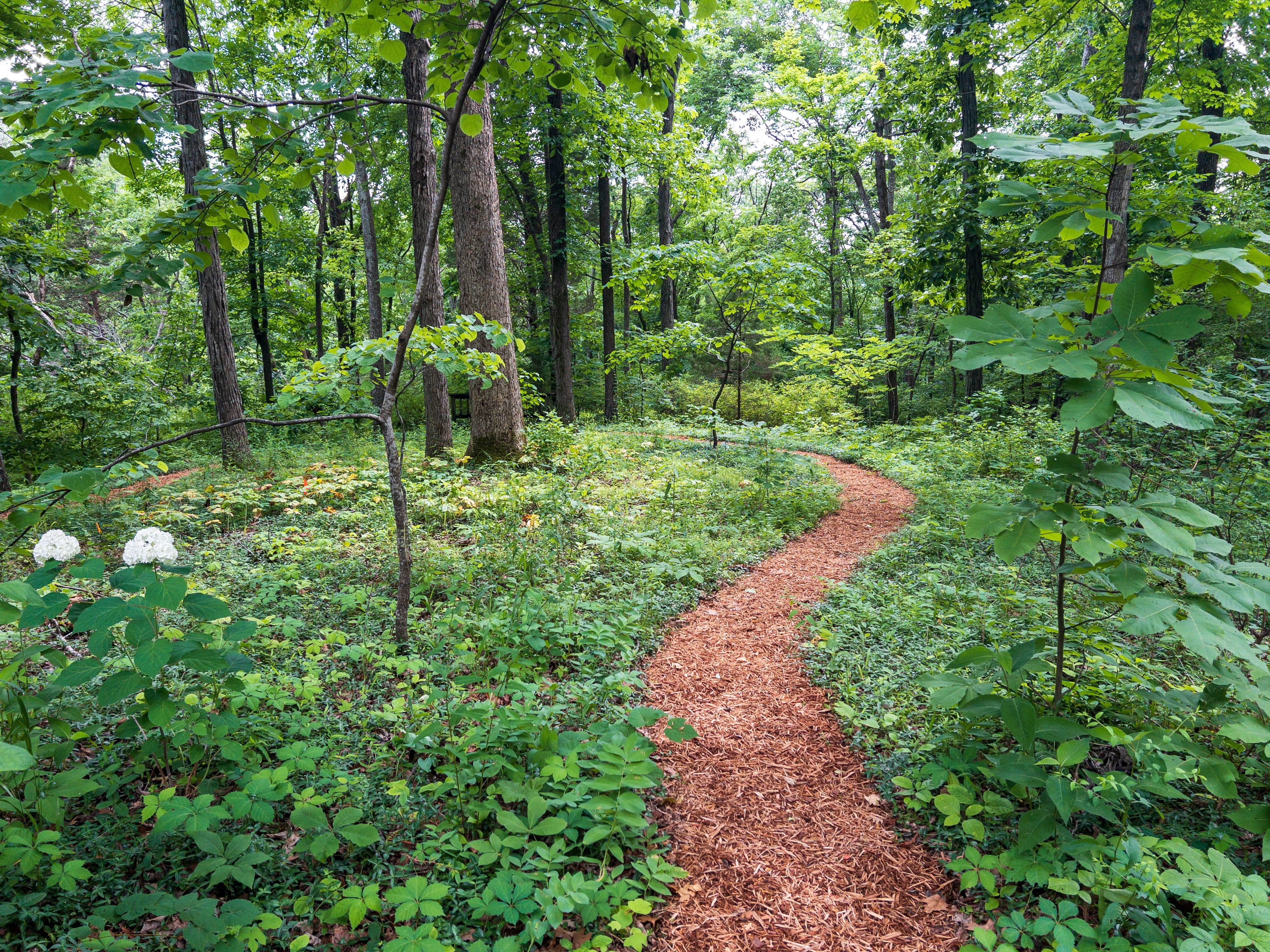
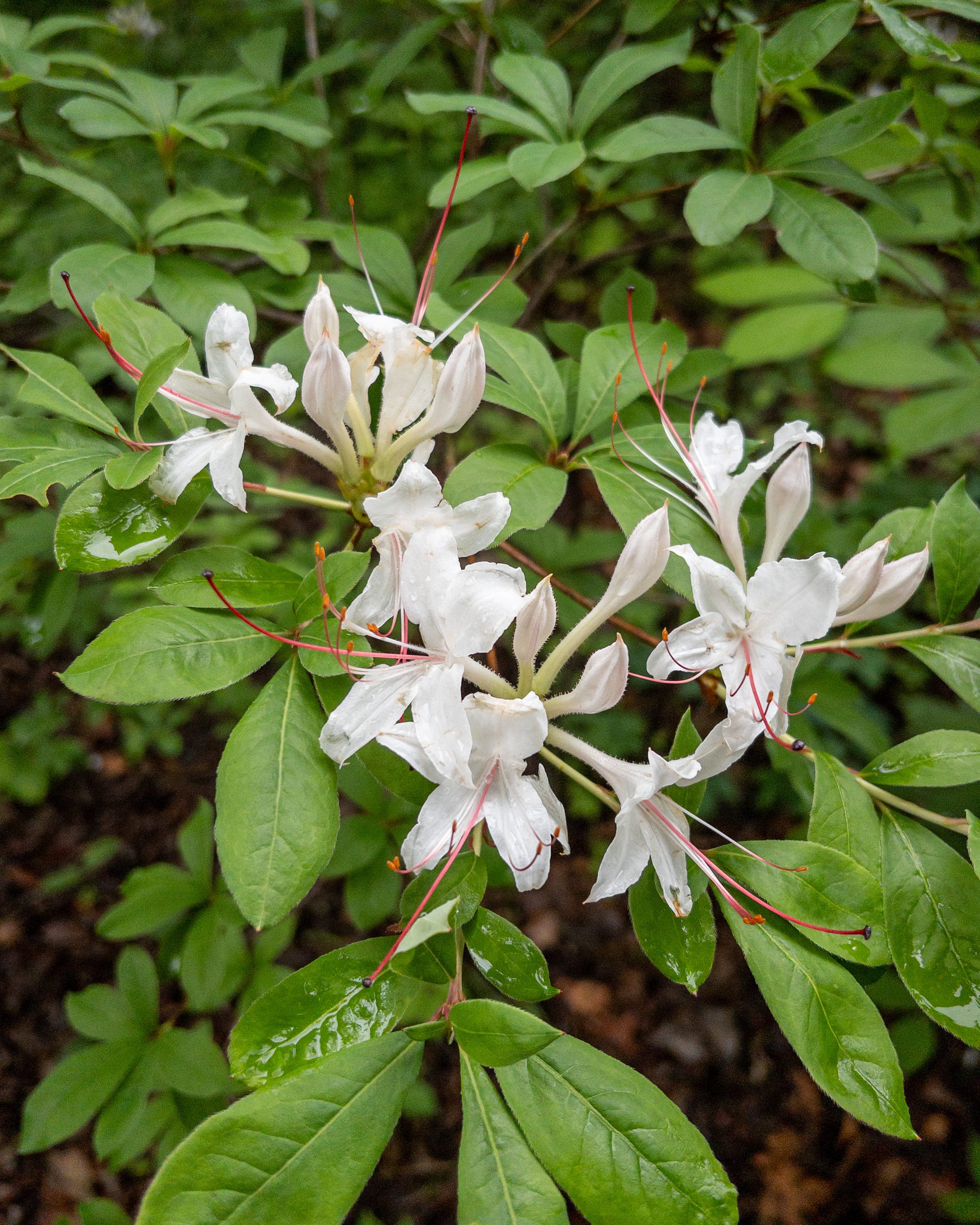
The garden has settled into its summer greenery now that the spring ephemerals have faded and the canopy has fully leafed out. Still, there are moments of brightness. A large sweet azalea perfumes the damp air, its white blooms suspended delicately at branch tips, drawing bees and butterflies throughout the day. Nearby, volunteer hydrangeas bloom in unexpected places, while Oakleaf Hydrangeas lean quietly along the woodland path that meanders through the trees.
Soon, the Bottlebrush Buckeyes bordering the driveway will begin their annual display. Their tall, upright white flowers seem almost too large for shade gardens, and every year they become magnets for butterflies. Many of the shrubs have already begun forming berries and fruit that wildlife will soon depend on. Lately, I’ve been collecting seeds from some of the early-blooming wildflowers to scatter them into other corners of the garden and woods.
In front of my studio, three newly planted ‘Little Henry’ Virginia Sweetspire now hug a large boulder. They are in full bloom, delightfully fragrant and alive with bumblebees, butterflies, and countless smaller pollinators. By autumn, their foliage will turn a deep red, carrying their beauty into another season.
Goldenseal and Yellowroot have spread generously throughout the garden over the years, and there are many more colonies scattered throughout the woods beyond. Over time, I’ve occasionally chewed Spicebush twigs or made tea from plants gathered nearby. I’ve long felt that tasting a place’s plants deepens your relationship to it, though only with an understanding of what is safe. I learned the plants themselves long before I learned which ones could be eaten.
I know it is probably time to slow down on buying and planting more here. But even after all these years, I still find myself searching for plants I’ve never grown — especially those that extend the blooming season or benefit wildlife.
My garden has become far less about display than it once was. What matters most to me now is creating habitat. Shelter. Food. A place where life gathers.
Shade gardens, especially, ask something different of us. They are less about bright explosions of color and more about subtlety — texture, shifting greens, filtered light, and calm.
"What matters most to me now is creating habitat. Shelter. Food. A place where life gathers." You've put into words what I long for and strive for--in my garden, in my home, in my soul, in our world.
Thanks for bringing me along on your beautiful, gentle morning.
I can only imagine, with the help of your prose, how delightful it is. I confess a fondness for oak-leaved hydrangeas, having had one in each of my previous two gardens.